

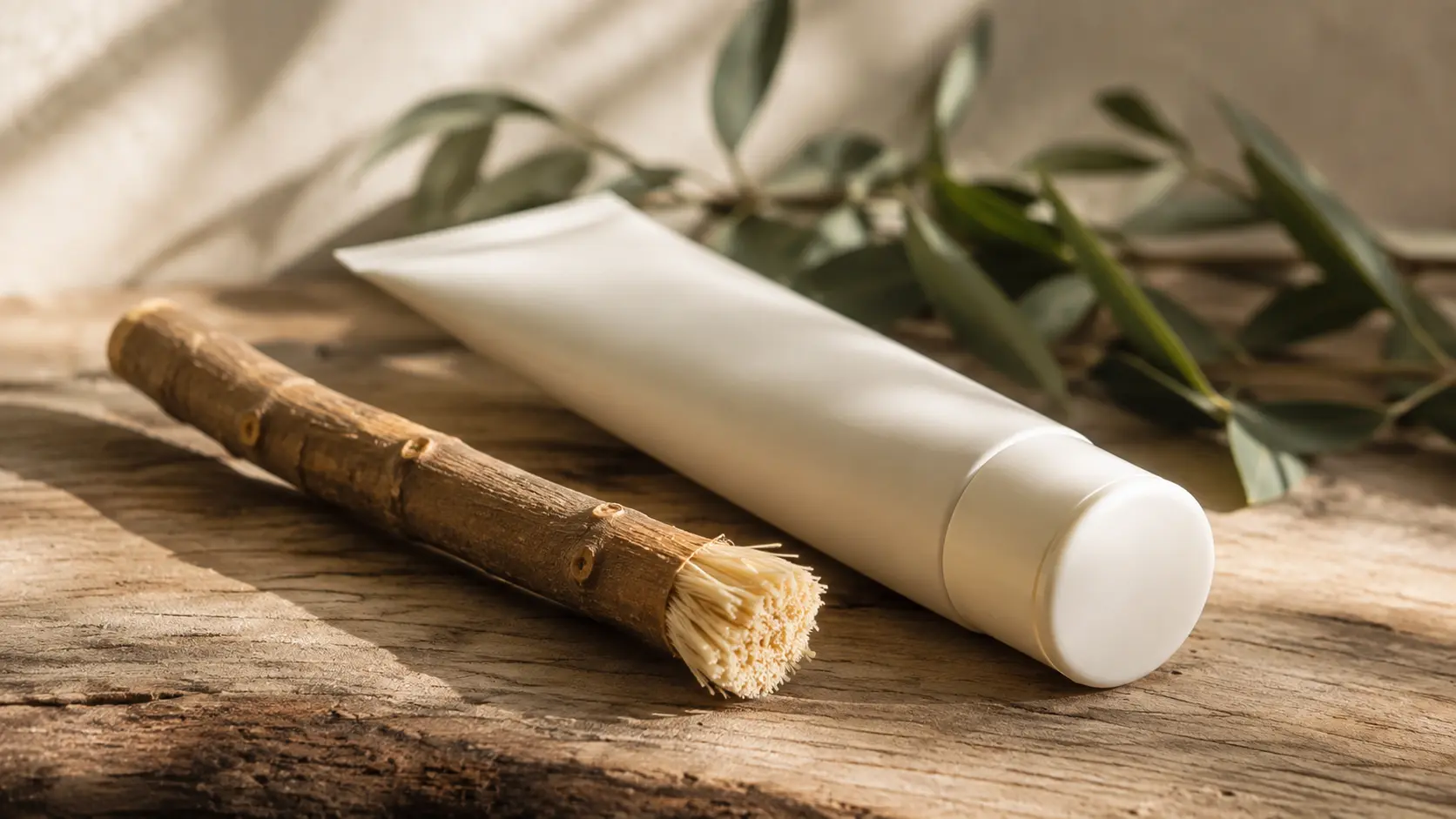
Obtained from the roots and branches of the Salvadora persica tree, miswak has been part of teeth cleaning across many cultures for centuries — a tradition also found in Beyazgül, still alive in modern oral care today.
What Is Miswak, and How Is It Traditionally Used?
The tip of a miswak twig is gently chewed to form a natural brush, used to clean teeth. This method has been carried on for generations, especially across the Middle East and North Africa.
What Miswak Extract Contributes to Oral Care
Offers a traditional cleansing feel: Favored by those seeking a fresh, natural oral care experience.
May help support the oral flora: With its plant-based nature, it can contribute to a general oral hygiene routine.
May support breath freshness: Its natural aroma can add a sense of freshness.
How the Tradition Reaches Modern Toothpaste
Today, miswak extract can be added as an ingredient in toothpaste formulations, alongside its traditional twig form. This allows the benefits of traditional wisdom to be simply integrated into a daily brushing routine.
Who Should Be Cautious?
Products containing miswak are generally considered suitable for many people. However, if you have any concerns or issues related to oral health, consulting a dentist is recommended. This article doesn't replace a dentist's advice.
Miswak Extract in Beyazgül
Foraflora's Beyazgül toothpaste includes Miswak extract as a real ingredient, bringing this traditional wisdom together with a fluoride-free, SLS-free modern formula. Explore the Beyazgül line.
Frequently Asked Questions
Do a miswak twig and a toothpaste with miswak extract offer the same effect?
While both come from the same traditional plant, their use and formulation differ; we don't make a comparative efficacy claim.
Does miswak extract replace fluoride?
No. Fluoride's cavity-preventing effect is well established; miswak extract offers a different traditional contribution and doesn't replace it. If you're at risk of cavities, consult a dentist.
Is toothpaste with miswak extract suitable for children?
For product choices for children, consulting a dentist is always recommended.
Because oral health is a space where tradition and science meet.

